High degree of innovation
Made in Germany
Healthy floors
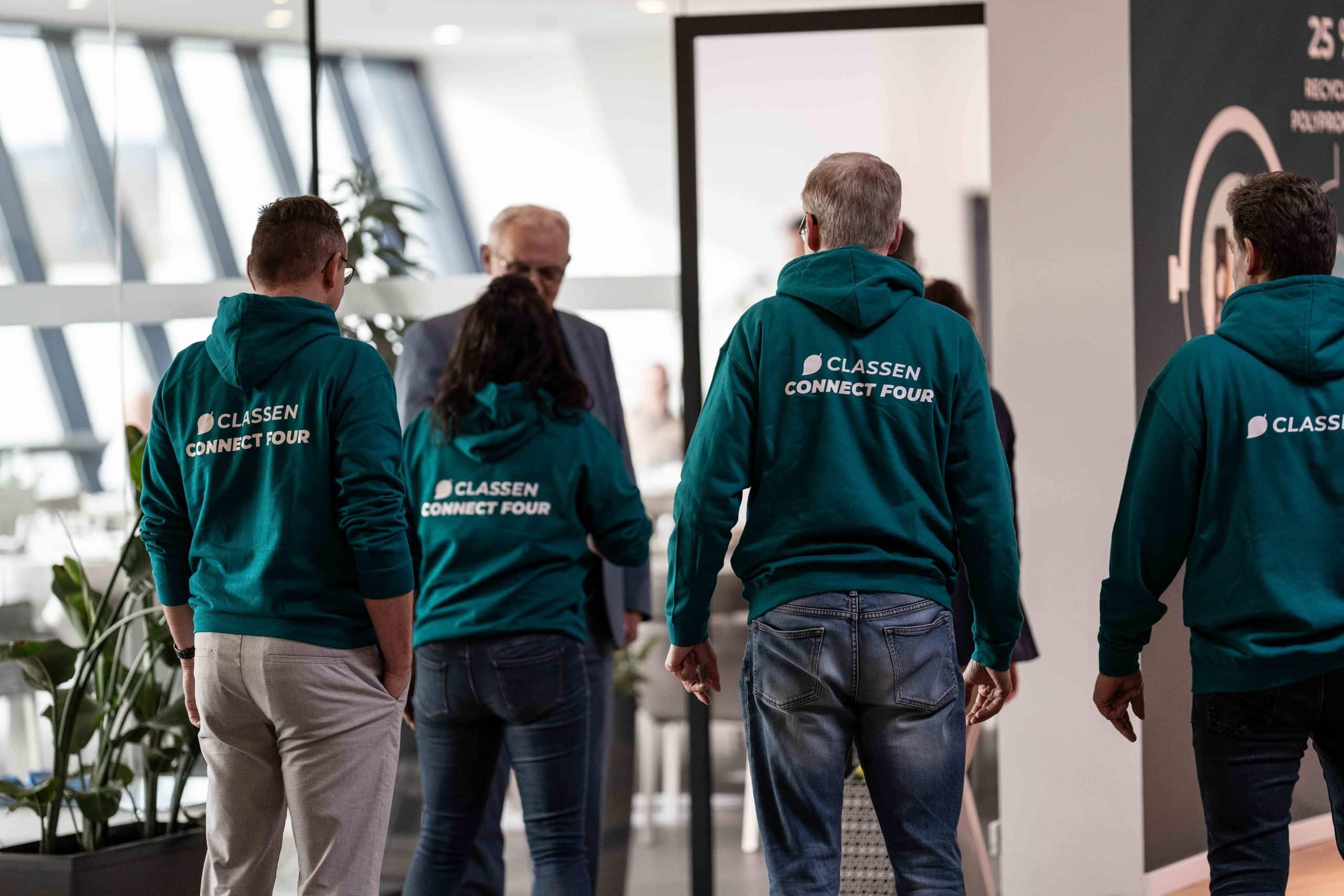
"I gained hackathon experience from my first job at a tech startup—and have always found this format incredibly valuable for developing unconventional ideas in a short period of time," explains Céline Quervel, Managing Director of CLASSEN. Together with her team, she has now launched what is probably the first hackathon in the flooring industry.
The goal was to develop a working prototype in 48 hours—based on a real-life challenge from CLASSEN everyday work: the further development of digital printing technology using artificial intelligence. This ambitious goal was made possible thanks to close collaboration with an experienced AI expert, who showed them how to "let AI work for you." This enabled them to create functional prototypes within a very short time, which would normally take weeks or even months.
The participants: a mix of product management, design center, marketing, prepress, production and digital printing, supplemented by external AI experts and UX/UI specialists. People who hardly ever meet in everyday life now worked hand in hand.
In three mixed teams, they developed ideas, designed user interfaces, wrote code, and tested new tools—all with the aim of CLASSEN shaping the future of digital printing at CLASSEN .
Contrary to expectations, the teams' focus was not on the limitless variety of designs that digital printing promises for customers. Instead, the pitches revealed that the participants primarily wanted to simplify internal processes and make them more efficient - with the help of AI-supported assistants, dashboards or automation. A surprising result that highlights the explosive nature of intelligent process support.
"In our day-to-day work in digital printing, we often think in terms of production processes. But these two days were about seeing the big picture. The exchange with other departments opened up completely new perspectives for us - both technically and conceptually. I would never have thought that something so concrete and well thought-out could be created in just two days.
- Timo Linnenbrügger, Head of Digital Printing and Lamination
On the second day, the teams presented their results in a final pitch—in front of a jury consisting of strategically important customers, members of the owner family, and the top management of CLASSEN.
Although there was an official winner in the end, the public vote was extremely evenly balanced. All three concepts received a similar number of votes. Even during the event, all teams agreed that this was just the beginning.
"All the teams have decided to develop their ideas further. We are now pooling the expertise from these interdisciplinary groups in order to bring the prototypes to market maturity together. This will result in a new innovation project - with real solutions for real challenges," summarizes Céline Quervel.
The hackathon was not just a format - it was a cultural signal. It showed that innovation in industry can also emerge outside of traditional development cycles: through openness, by breaking down silos - and through the courage to simply try something new.
Our service hotline

You need to load content from hCaptcha to submit the form. Please note that doing so will share data with third-party providers.
More InformationYou need to load content from reCAPTCHA to submit the form. Please note that doing so will share data with third-party providers.
More InformationYou need to load content from reCAPTCHA to submit the form. Please note that doing so will share data with third-party providers.
More InformationYou need to load content from reCAPTCHA to submit the form. Please note that doing so will share data with third-party providers.
More InformationYou need to load content from Turnstile to submit the form. Please note that doing so will share data with third-party providers.
More Information